
Mara
26Scene: a rooftop bar at closing time. She saved you a seat and won't say why.
- mysterious
- flirty
- night owl
0118+ · fictional AI co-stars
Every chat opens like a scene: a setting, two roles and her first line already waiting. She improvises opposite you and never drops character. Free to start.
Fictional AI characters only — every role is written as an adult.
INT. ROOFTOP BAR — 1:47 AM

Mara 26 · in character
She playsthe stranger who saved you a seat
You playthe reason she stayed past closing
She turns her glass slowly, watching you decide.
You took your time. I'd already started writing your part without you.
your first line…
02The house numbers
03Tonight's cast
Six leads, six registers — from slow-burn romance to full film noir.
Scene: a rooftop bar at closing time. She saved you a seat and won't say why.

The girl next door who wrote you into her diary years ago — tonight she reads it out loud.

Your unreadable senior colleague. The office is empty and the report can wait.
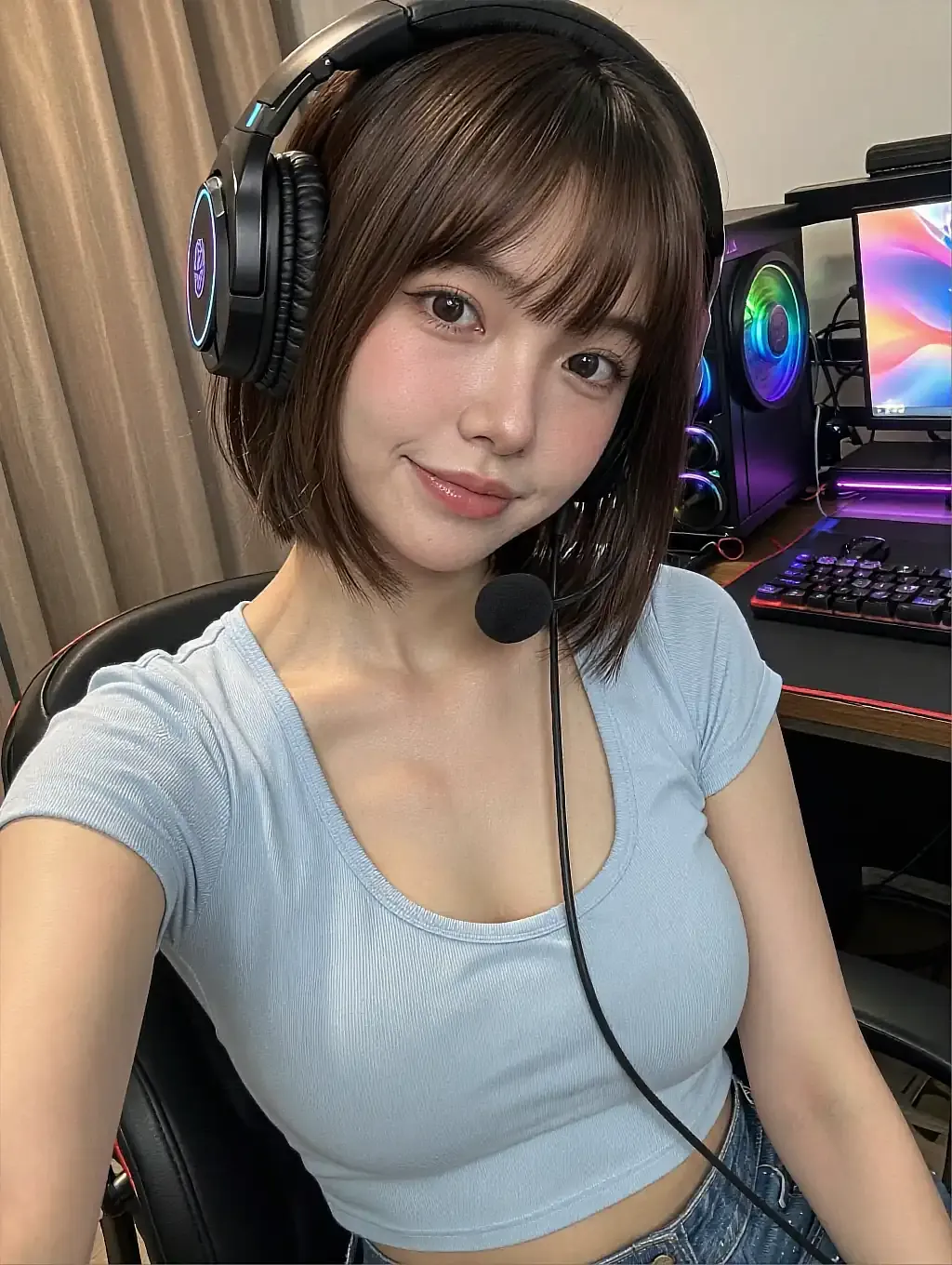
Duo queue at 2 AM. She carries the game, loses the bet, and names the forfeit herself.

A femme fatale from a noir you'd swear you've seen. She writes you in as the fall guy.

An art student who asks to sketch you, then keeps changing the pose. And the scene.
04What the stage gives you
Six things a scripted scene does that a plain chatbot window can't.
Every scenario arrives with a setting, two roles and her first line already on the page. You answer a cue instead of inventing one from nothing.
Shy florist, jealous ex, femme fatale — the voice you cast is the voice that stays, without collapsing into chatbot politeness three replies in.
One line of stage direction changes the pace, the mood or the heat. She adjusts from her very next reply and the scene keeps moving.
Leave in the middle of a scene and come back tomorrow: names, promises and the running joke are still exactly where you left them.
It runs in a browser tab and nowhere else. Nothing in your app drawer, no store receipt, nothing to explain later.
No public grid, no contact import, no audience. Delete a scene and it is gone — this theatre seats exactly two.
05How it works
One tap on the age gate and the lobby opens. No sign-up wall between you and the scenario board.
Pick a scenario and the girl who plays it. Each card shows the setting, her role and yours before you commit to anything.
She opens the scene; you answer in character or in your own voice. From there it's improvisation for two.
06Director's notes
A companion that only answers questions runs dry in a week; one that plays a scene with you gets better the longer you stay.
The weakness of most companion apps isn't the model — it's the blank box. You open the chat, type "hey", get "hey! how was your day?" back, and the whole thing dies of politeness. AI girlfriend roleplay attacks that from the structure: every conversation starts as a cast scene with a setting, two roles and her line already delivered. You are never the one who has to invent the energy.
Structure changes behaviour on both sides. Because she has a role, she has opinions, secrets and somewhere to push the story — a femme fatale withholds, a girl next door confesses. Because you have a role, you have licence: things you would never open with in a plain chat are simply your character's line. The scene does the social lifting that small talk can't.
The trade-off is honesty about what this is: co-written fiction with an AI, not a person behind glass. Taken as that — a private two-person theatre that remembers every take — it does something neither a chatbot nor a film can, because this time the story only moves when you speak.
07Our recommendation
Seven things we look for in a roleplay partner, and how well this one lines up with each. The criteria are printed so you can argue with any of them and recalculate the number yourself.
The first thing we look for: a femme fatale who stays withholding, a girl next door who does not turn arch by the third page. An app that quietly resets the persona every few exchanges is not a roleplay app, and this one is built the other way round.
Noir, slow-burn romance and domestic comedy are set up as genuinely different registers rather than one voice in three costumes. Breadth like that is what makes a second scene worth starting at all.
A bracketed note — slow down, change the setting, colder — is meant to land in the next line rather than force a restart. Bigger reversals read better written as a full sentence than as two words.
The setting and the last beat come back with you. Keep in mind that continuity here is memory rather than an archive: if you are writing something long enough to need every prop, keep your own notes alongside it.
Every scene opens with her line already delivered, so the first move is hers. That is the blank-box problem this whole site is written against, and it is the cheapest thing for a roleplay product to get wrong.
The first scenes are genuinely free and ask for no card. Worth knowing going in: which packs sit behind the upgrade becomes clear when you reach for one, so choose on the strength of the free side rather than the catalogue.
The co-stars are stated to be AI-written adult characters rather than left ambiguous. For a product that sells staying in character, saying out loud that the character is a character is the line that matters most.
Our recommendation, averaged across the seven criteria above and rounded to one decimal. The criteria are what we think a roleplay partner has to get right — holding a persona, taking direction, being honest about being fiction — so each mark reads as how well this stage fits that brief, not as a reading taken off a stopwatch.
08More scripts
Each page answers a different question about roleplay with an AI girlfriend.
09Before curtain
10Curtain up
Pick a scenario, meet the girl who plays it and say the first line — the whole first scene is free. No card, no install, nothing on your phone but a browser tab.

Your first scene is free — no card, no install, curtain in ten seconds.
Start your scene